

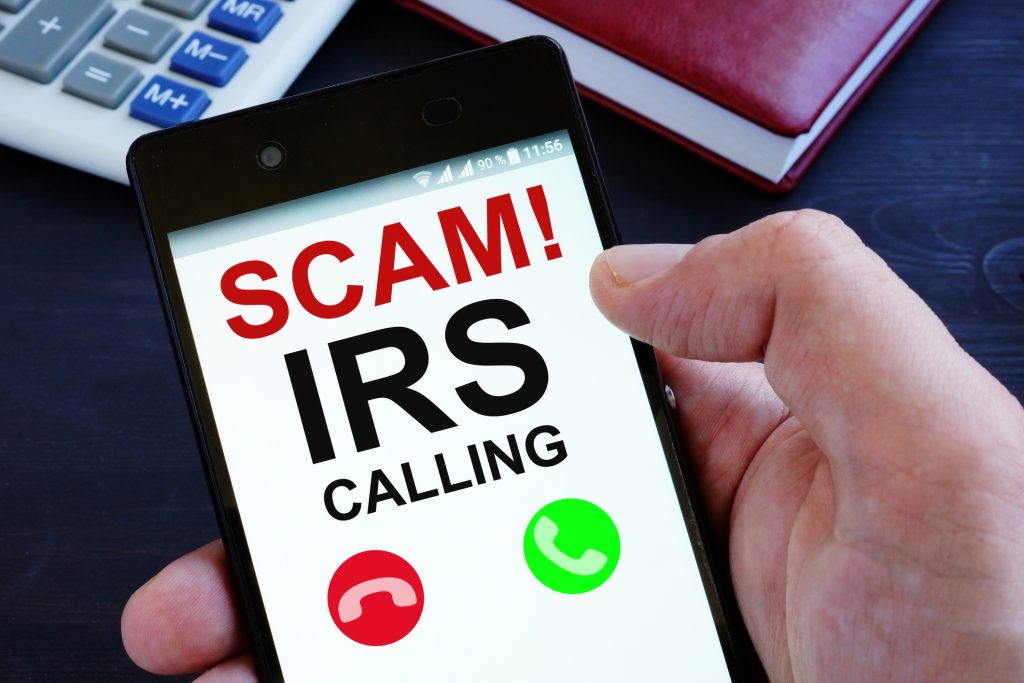
As tax season approaches, IRS scams are rising significantly. Scammers often impersonate the IRS regarding unpaid taxes – using threats of arrest or demands for immediate, unusual payments. They use sophisticated tactics like AI, social media misinformation and impersonation through calls, texts and emails to steal personal information and money, often threatening arrest or penalties and demanding unusual payments like gift cards. The IRS warns everyone to be vigilant for fake notices, suspicious refund claims and pressure tactics.
The real IRS first sends a paper bill by mail and will never demand immediate payment via gift cards or wire transfers. Watch for the below telltale signs of an IRA scam, and if you are targeted follow the below steps for help.
Telltale Signs of an IRS Scam
- Unexpected Contact: The IRS typically initiates contact via the U.S. Postal Service, not by unexpected phone calls, emails, or text messages.
- Immediate Payment Demands: Scammers demand immediate payment and often use aggressive tactics, such as threatening to bring in local police, deport you or revoke your driver’s or business license.
- Unusual Payment Methods: The IRS will never require payment using specific methods like a prepaid debit card, gift card or wire transfer. Legitimate payments are made to the U.S. Treasury. (Example: being directed to withdraw cash and deposit it into a cryptocurrency ATM to secure funds or make a payment is a scam.)
- Inability to Appeal: Scammers won’t allow you to question or appeal the amount you supposedly owe. The real IRS provides opportunities to dispute or appeal a tax bill.
- Suspicious Information Requests: The IRS will not ask for your credit/debit card numbers over the phone or request sensitive information like your Social Security number or PIN via email or text.
- Generic or Poorly Worded Messages: Scams often contain misspellings, poor grammar, or generic greetings instead of your name.
What To Do If You Are Targeted
- Do Not Engage: Hang up the phone immediately or do not reply to the email/text message.
- Do Not Provide Information: Never give out personal or financial information like your credit card number or Social Security number.
- Verify the claim: If you think you might legitimately owe taxes, do not use a number provided by the suspicious caller. Instead, call the IRS directly at their official number, 1-800-829-1040, or check your account information on the official IRS.gov website.
Report the scam:
-
- Report the incident to the Treasury Inspector General for Tax Administration (TIGTA) at 1-800-366-4484 or by using their online IRS Impersonation Scam Reporting form.
- Forward scam emails to phishing@irs.gov and text messages to 7726 (SPAM).
- File a complaint with the Federal Trade Commission (FTC).